


March 11, 2026
Should You Sell Your Watch Privately… or to a Dealer?

Felix Goldammer @GOLDAMMER YouTube
Head of Marketing
People often write messages that begin in a surprisingly similar way.
“Hi Felix, I recently inherited this watch from my father or my grandfather, and I honestly have no idea what to do with it.”
Sometimes it’s someone who has inherited a watch and simply wants to understand its value. Sometimes it’s a collector whose watch box has slowly grown a little too full over the years. And sometimes it’s a watch that was bought ten years ago, worn for a while, and now quietly waits in a drawer while its owner wonders what it might be worth today.

Selling a watch sounds simple when you first think about it. You take a few photos, upload them somewhere online, and wait for a buyer.
But in reality, selling a watch — especially a vintage watch — is usually a little more complicated than that.
After working with thousands of vintage watches from the 1940s through the early 2000s at Goldammer Vintage Watches, we’ve seen how watches change hands many times throughout their lives. Recently we added a simple option on our website where collectors can submit watches directly if they are considering selling.
Even in the first month, the responses revealed something interesting about how the watch market actually works behind the scenes.
Prefer video? Watch it here
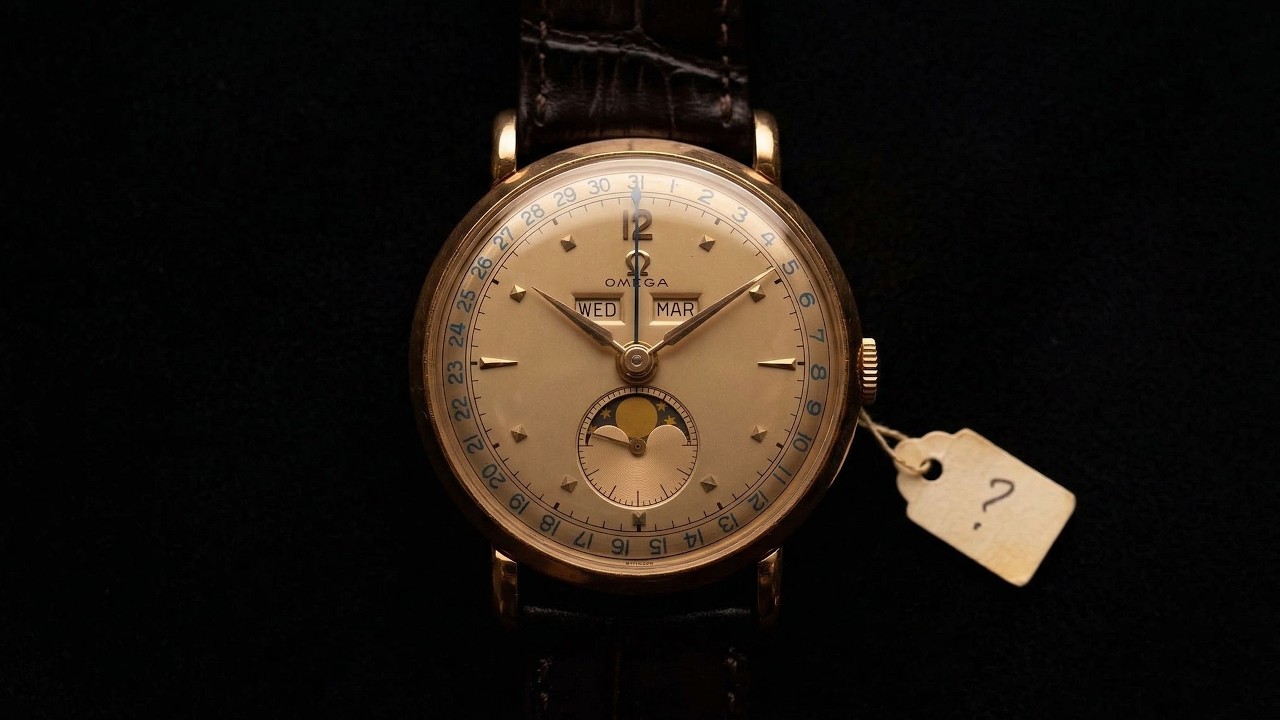
The Reality of Selling a Watch
During the first month alone we received around 140 watches offered through our website.
At first glance, that number might sound impressive. But the reality was quite different.

Roughly half of those watches were pieces that were interesting within the area we focus on — mainly well-preserved vintage watches with strong originality. And from those 140 submissions, we ultimately purchased six watches.
That number alone already illustrates an important point about the watch market.
Selling a watch is not just about the watch itself. It’s also about expectations, condition, logistics, and sometimes simply about how the numbers work in the real market.
The Difference Between Asking Prices and Real Market Prices
One of the first challenges most sellers encounter is the question of price.
The typical starting point is an internet search. Someone types the brand and reference number into Google and quickly finds watches listed online — perhaps for €5,000, maybe €8,000, sometimes even more.
It’s completely natural to assume that those numbers represent the value of the watch.

But in reality, many of those prices are asking prices, not selling prices.
They represent what someone hopes to achieve, not necessarily what someone actually paid. Some watches remain listed online for months, sometimes even years, without ever selling.
Dealers and experienced collectors follow the market closely and understand this difference. But if you are selling a watch for the first time, it’s easy to assume that those listings represent the true market value.
And this is often the moment where expectations and reality begin drifting apart.
Selling Your Watch Privately
Selling a watch privately can sometimes result in a higher price.
But it also requires significantly more time and patience.
Once a watch is listed online, messages begin arriving. Some buyers ask thoughtful questions about the dial, the movement, or the service history. Others request additional photos. Many begin negotiating immediately. And some simply disappear after a few messages.
For collectors who enjoy interacting with other enthusiasts, this process can actually be part of the experience. But for others, it quickly becomes exhausting.

Beyond the conversations themselves, there are also practical aspects to consider. Payment methods, shipping logistics, insurance, and unfortunately sometimes scams are part of selling valuable items online.
Most transactions go smoothly, but when something goes wrong it can become stressful very quickly — especially when large amounts of money are involved.
Selling a Watch to a Dealer
For this reason, some collectors prefer selling their watch to a dealer instead.
In this case the process is usually much more straightforward. The dealer evaluates the watch, makes an offer, and if both sides agree the transaction can be completed quickly.
Of course there is a trade-off.
A professional watch dealer needs a margin to operate a business. Watches must be inspected, sometimes serviced, photographed professionally, stored securely, insured, and eventually sold again.

Behind every watch business there is a team and a structure that makes that possible.
Because of this, the price offered by a dealer will normally be lower than what might be achieved in a perfect private sale.
In simple terms, part of the potential value is exchanged for speed, simplicity, and security.
For many sellers, that trade-off makes perfect sense.
Why Good Photos Matter When Selling a Watch
One thing we noticed very quickly during the first month of submissions was how important photographs are.
Before a watch ever arrives on our desk, the only information we have comes from the photos and description provided by the seller.
Vintage watches are full of small details that determine their value. The printing on the dial, the sharpness of the case edges, the condition of the hands, or the aging of the lume can all change the evaluation significantly.

When photos are blurry or taken under strong reflections, it becomes almost impossible to form a reliable impression.
Clear photos taken in natural light — showing the dial, case, movement, and caseback — make an enormous difference.
Condition and Originality
Another important factor is the condition of the watch.
Vintage watches live long lives. They are worn, serviced, sometimes polished, and occasionally repaired. That history is part of what makes vintage watches interesting.
But collectors pay very close attention to originality.
Over-polished cases lose their sharp geometry. Replacement parts may not match the original design. And refinished dials can dramatically change the character of a watch.
For experienced collectors these details become easy to recognize. But for someone selling a watch for the first time, they are often difficult to see.
International Sales and Import Duties
One surprising observation from our first month was how many watches were offered from outside the European Union.
Some of these watches were beautiful pieces that we would normally be very interested in buying. But international trade introduces another factor that cannot be ignored: import duties and taxes.

When a watch enters the EU from another country, these additional costs must be included in the calculation. And unfortunately that sometimes means the offer we can make becomes less attractive for the seller.
In those cases the transaction simply becomes difficult for both sides.
What Is the Best Way to Sell a Watch?
If you are thinking about selling a watch, a few simple principles can make the process much smoother.
Clear photographs, an honest description, and realistic expectations about the market already help enormously.
But the most important question to ask yourself before selling is this:
What matters more to you — achieving the highest possible price, or having a process that is simple, safe, and predictable?
Some collectors enjoy the process of selling privately and negotiating with other enthusiasts.
Others prefer a faster and calmer process where the watch is evaluated by professionals and the transaction is completed without unnecessary complications.
Both approaches are completely valid. The right choice simply depends on the situation.
Selling Your Watch to Goldammer
Over the years many collectors have written to us asking whether we buy watches directly.
To simplify that process, we created a submission option on our website where you can upload photos and information about your watch.
If the watch fits our collection, we make an offer. If not, there is absolutely no obligation.
Because in the end, the watch world is surprisingly small.

Collectors, dealers, and enthusiasts are all part of the same ecosystem. Watches move from one wrist to another — sometimes across decades, sometimes across continents.
And whether a watch is sold privately or through a dealer, the most important thing is that it eventually finds the next person who truly appreciates it.
If you are considering selling a watch, you can submit it here:
→ Sell Your Watch
https://goldammer.me/pages/sell-your-watch


Leave a comment