


February 25, 2026
The Biggest Mistakes People Make When Buying Vintage Watches

Felix Goldammer @GOLDAMMER YouTube
Head of Marketing
The biggest mistakes in vintage watches rarely begin with the watch itself. They begin with a feeling.
A sense of urgency. The quiet conviction that this one is too good to miss. The little voice that says, If I don’t buy it now, someone else will.

After handling thousands of vintage watches over the past years, one thing has become very clear to us: emotion is the most expensive part of collecting. Vintage watches are not practical purchases. Nobody needs a 50-year-old mechanical object to tell the time. What people fall in love with is character, proportion, patina, the idea of history living on their wrist. And that emotional pull is precisely where the first mistake happens.
Prefer video? Watch it here
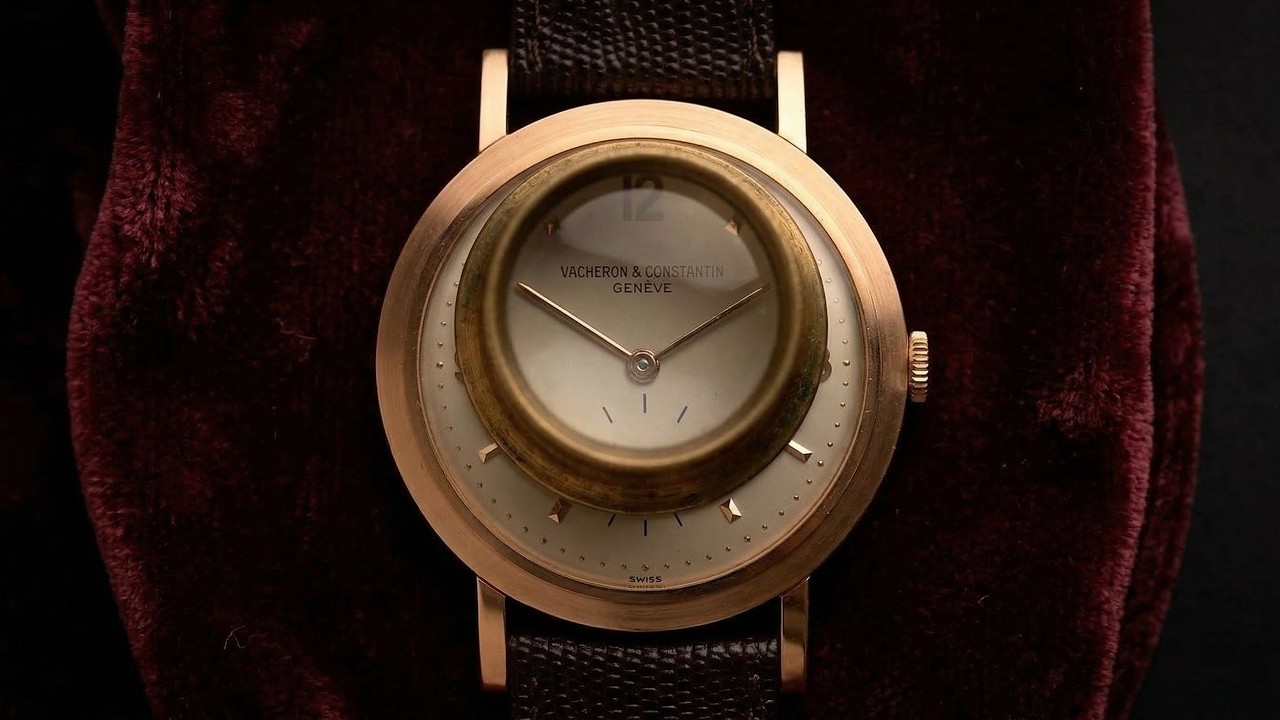
1. Falling in Love Too Fast
The moment you imagine the watch as already yours, analysis turns into justification. Listings use words like “rare,” “investment,” or “unpolished” because they sell certainty. But certainty in vintage is often artificial.

If you feel pressure to buy immediately, slow down. Vintage rewards patience. The ability to walk away is often the difference between a collector and a gambler.
2. Buying the Paper Instead of the Watch
Box and papers have become almost mythical in the modern market. A full set creates comfort. It feels complete. It feels official. But in reality, vintage boxes, booklets, and even warranty papers can often be sourced separately. Accessories exist. Stories can be assembled. Back in the 1950s and 60s, most buyers treated packaging as disposable. They did not buy watches as future collectibles. They bought them to wear.

Box and papers create comfort. They feel official, complete, reassuring. But vintage accessories can often be sourced separately. Boxes survive without watches. Papers survive without history.

A genuine first-owner set with consistent provenance is valuable. A random box and loosely matching documents are often presentation, not proof. The watch itself must always come first.
3. Price Without Context
Two watches that appear identical online can differ dramatically in originality and long-term value. Many listings show asking prices, not selling prices. Condition, replacement parts, polishing, and mechanical health rarely reveal themselves in a single number.

The question is never “Is this cheap?” It is “Why is this cheap?” In vintage, a low price is often a signal — not an opportunity.
4. Ignoring Mechanical Risk
A vintage watch is a machine. Machines age.
A watch that runs is not necessarily a healthy watch. Service costs can quickly reach four figures, especially for complicated movements. Erratic date changes, rough chronograph resets, grinding sounds, or inconsistent performance may only appear after purchase.

Buying without warranty or accountability increases that risk. What looks like a good deal can become expensive very quickly.
5. Underestimating Size and Wearability
Vintage proportions are different. For decades, 32 to 36 millimeters was standard. Today, many buyers are visually conditioned to larger watches. The result is often disappointment — not because the watch is wrong, but because expectations were.

Wearability matters more than rarity. An integrated bracelet that is too short may be difficult to correct. A case that looks elegant in photographs may feel underwhelming in daily life. If a watch feels wrong on the wrist, it will not be worn.
Measure carefully. Try before romanticizing.
6. Overlooking Dial Originality
Most expensive mistakes happen on the dial.

Originality reveals itself in details: texture, symmetry, printing consistency, lume behavior under UV light. Paint that overlaps applied markers, glue residue near indices, or mismatched aging between hands and dial can indicate intervention.

Not every imperfection is manipulation — mid-century manufacturing was not flawless. What matters is coherence. The dial, case, and movement should tell the same story. When one part feels significantly newer or older than the rest, caution is warranted.
7. Frankenwatches and Overpolishing
Over decades, watches are often “improved.” Crowns are replaced. Hands are swapped. Dials are exchanged. Cases are polished until sharp edges disappear.

Metal removed cannot be restored. Geometry lost cannot be recovered. Collectors increasingly prefer honest wear over artificial perfection because authenticity carries long-term value.
8. Not Having a Framework
Technical knowledge alone is not enough. What matters is structure.

If something feels uncertain, it usually is. When dial, movement, and case age consistently together, the probability of integrity increases. And perhaps most importantly: buy the seller, not just the watch. Reputation and accountability matter more than small price differences.
9. Buying for the Wrong Reasons
Trends move quickly. Taste endures.

Before choosing a reference, define your own parameters: size, lifestyle, budget, aesthetic. A watch chosen to impress others rarely satisfies long-term. A watch chosen for yourself often does.
Final Thought
Vintage watches are not about perfection. They are about coherence.
When material, condition, movement, and history align, the watch feels calm. And calm decisions tend to be good decisions.

The goal is not to buy the rarest or most expensive piece. The goal is to buy the right watch, from the right source, for the right reasons.
And when that happens, collecting becomes less about anxiety — and more about appreciation.


1 comment
Just a few words to compliment you on your enterprise. Your watches are unique and the way you present them is very very nice. Congratulations. I live in a country where it is very difficult to either find good antique, let alone find a retailer overseas willing to ship to. I am in Cape Town and all I dream about is one day to have a little business like yours. Just for the love of the old and classic. Maybe when I can stop my day job! Keep up the great work. Frederic
Leave a comment