


February 06, 2026
What 2025 Taught Us About the Vintage Watch Business

Felix Goldammer @GOLDAMMER YouTube
Head of Marketing
For a brief moment in early 2025, it felt as if someone had quietly turned off the lights.
For years, the United States had been our strongest market. Buying vintage watches from Europe was straightforward, import taxes were manageable, and demand was steady.

Then, almost overnight, import tariffs jumped from around five percent to more than forty. Orders slowed dramatically. Conversations stalled. And like many others in the luxury watch world, we were left with a question that had no immediate answer: Is this a temporary disruption — or a structural change?
The vintage watch market had already been expected to face a difficult year. Political uncertainty, longer decision cycles, and a growing hesitation around high-value purchases defined much of the broader landscape in 2025. The tariff situation simply made those underlying tensions impossible to ignore.
Yet, looking back now, 2025 did not turn out to be a year of collapse for us. It became a year of clarity.
Prefer video? Watch it here
A Personal Milestone, Set Against a Shifting Market
In the midst of that uncertainty, something seemingly unrelated happened.
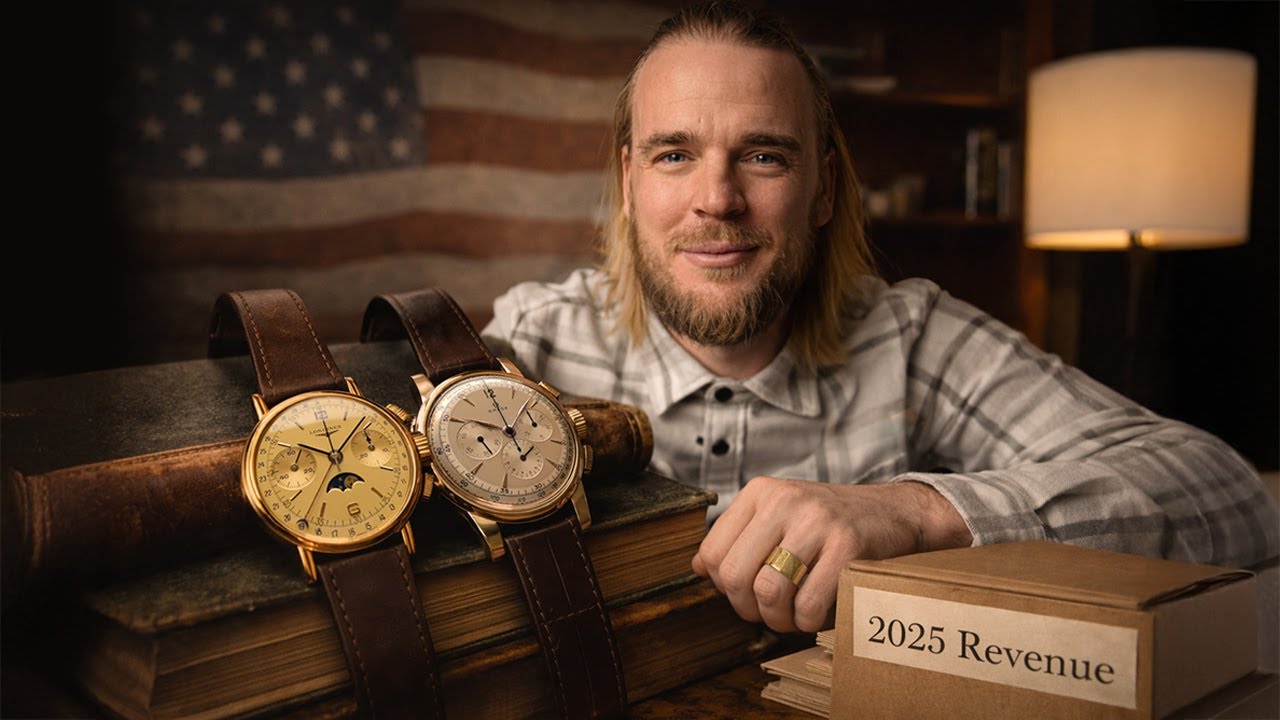
Last year, we reached 500,000 followers on Instagram. Half a million people following our work, our watches, and our perspective on this market. It was a milestone that arrived quietly — and one whose significance only became clear in retrospect.
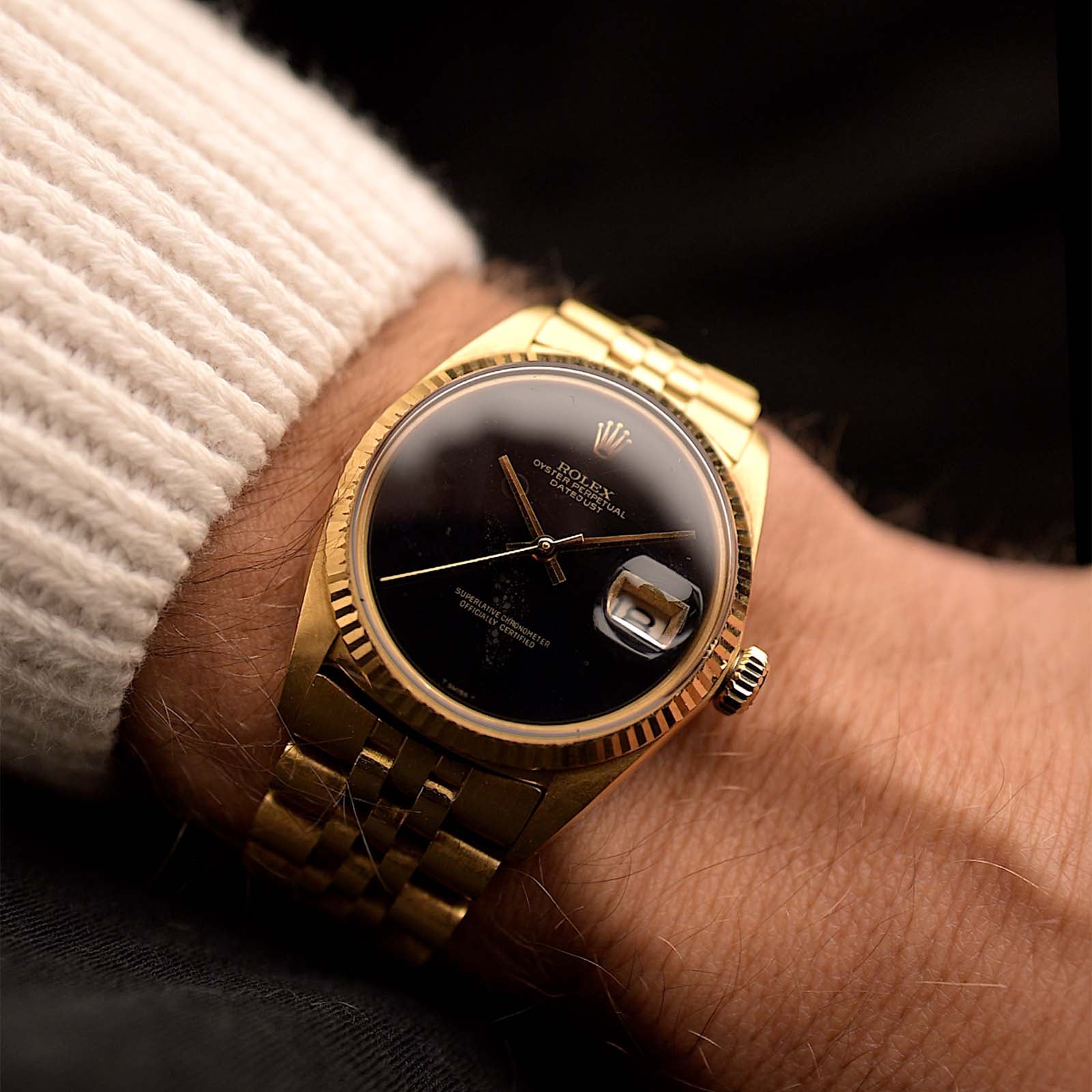
To mark the moment, my business partner Marc surprised me in front of our entire team. He handed me a watch: a 1970s Rolex Datejust 1601 Pie Pan, two-tone steel and rose gold, with a black dial. Rolex produced this rose-gold two-tone configuration for only a short period, and examples are rarely seen today. It had been my dream watch for years.
The watch itself was special. The story behind it mattered more.
 Marc had bought it two years earlier for the business. When I first saw it back then, I remember commenting — casually, and without much thought — on how perfect it felt. Rose gold and steel, the black dial, the proportions. Life moved on, the watch remained in inventory, and eventually I forgot about it entirely.
What I did not know was that it had never been sold. Marc remembered that moment, quietly set the watch aside, and waited. The right time, it turned out, was this one — shared not privately, but with the entire team.
I still wear that watch almost every day. Not because it is rare or valuable, but because it has become a reminder of why we do this at all. Vintage watches are objects, yes — but they are also carriers of memory, patience, and intent.
When the Market Refuses to Stand Still
Sentimental moments, however, do not pause markets.
When the new U.S. import tariffs were officially announced, the reaction was immediate. For a period of time, orders from the United States nearly stopped. American clients, long accustomed to paying three to five percent in import taxes, were suddenly faced with costs that felt arbitrary and unstable. Worse than the numbers themselves was the constant fluctuation — fifteen percent one week, forty the next.
At that moment, there was no strategy that felt reassuring. No forecast that felt reliable. We did not know whether we would reach our goals for the year, or even what those goals should look like under the circumstances.

One thought kept returning: If this were easy, everyone would do it.
Trading vintage watches is not the simplified version of the luxury business. Nothing scales cleanly. Nothing is repeatable. Every watch carries its own condition issues, historical quirks, and buyer psychology. 2025 did not introduce those realities — it simply removed any illusion that they could be ignored.
Choosing Restraint Over Reaction
In uncertain markets, the temptation to react quickly is strong. It is also often misguided.
We chose to slow down. Not because business was failing, but because urgency would have been the wrong response. We did not push watches harder. We did not lower standards. We did not attempt to compensate for uncertainty by selling more volume at any cost.

Instead, we focused on what remained within our control. We adjusted expectations, became more selective in sourcing, and shifted attention toward communication and long-form content rather than pressure.
At the same time, we reconsidered geography.
A Broader, More Balanced Global Business
While the U.S. market remained volatile, we invested more deliberately in other regions. Europe, the Middle East, and parts of Asia grew in importance. Our website expanded into seven additional languages. Accessibility improved. International clients, previously peripheral, became central.
What followed was not a dramatic recovery, but a gradual rebalancing.
After the initial shock, the U.S. market returned — not to explosive growth, but to stability. By the end of 2025, it remained our single strongest market, roughly in line with the previous year. The difference was structural: it no longer carried the business alone.
Other regions grew significantly. Dependence decreased. The business became healthier.
Growth Without Selling More Watches
The numbers tell a story that initially seems counterintuitive.

In 2025, revenue rose to 4.5 million euros, up from 3.35 million euros in 2024. Yet the number of watches sold barely changed: 517 in 2025, compared to 511 the year before.
Six additional watches. Nearly one million euros more in revenue.
This was not the result of selling more aggressively. It was the result of better decisions — clearer selection, stronger positioning, and a deeper understanding of what our clients were actually looking for.
High-End Icons and Everyday Foundations
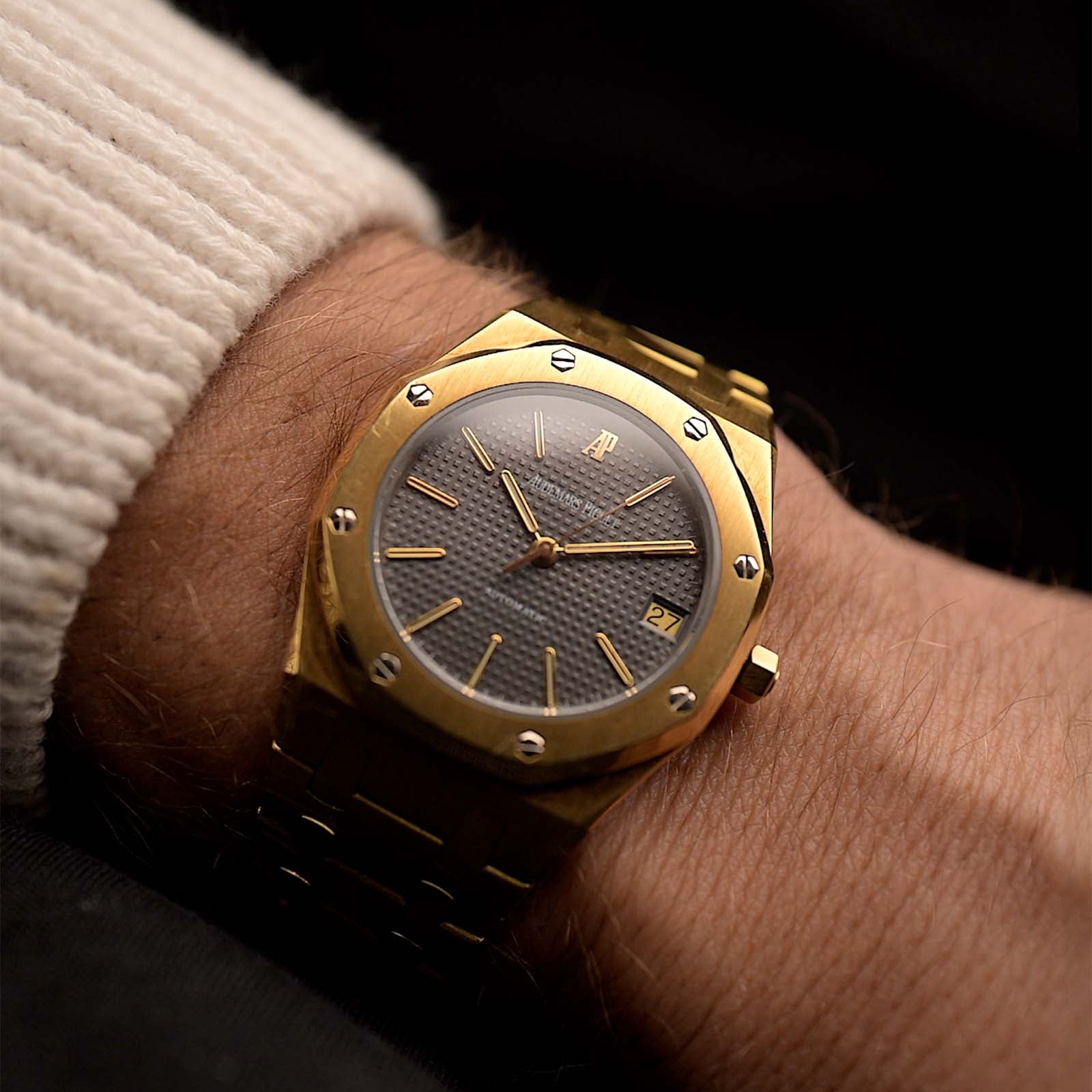
Yes, we sold rare and expensive watches. Rolex Day-Dates with wood dials. Datejusts with tiger’s eye, onyx, and malachite dials. Audemars Piguet Royal Oaks in various configurations. A Patek Philippe Nautilus 3800 in the forty- to fifty-thousand-euro range.
These watches still attract attention, and there will always be collectors for them. But they are not the backbone of a stable vintage watch business.
That foundation lies elsewhere.
Most of our volume came from classic, wearable watches in the lower to mid four-figure range. Omega, Cartier, IWC, and similar brands formed the core of our sales. These are watches meant to be worn, not stored — collectible without being speculative, accessible without being disposable.
High-end pieces create visibility.
Classic watches create continuity.
In 2025, continuity mattered more than headlines.
A Market That Became More Balanced
Brand distribution shifted as well. In 2024, sales were relatively evenly spread, with Rolex accounting for around twenty percent, followed by Patek Philippe and Vacheron Constantin at roughly fifteen percent each.

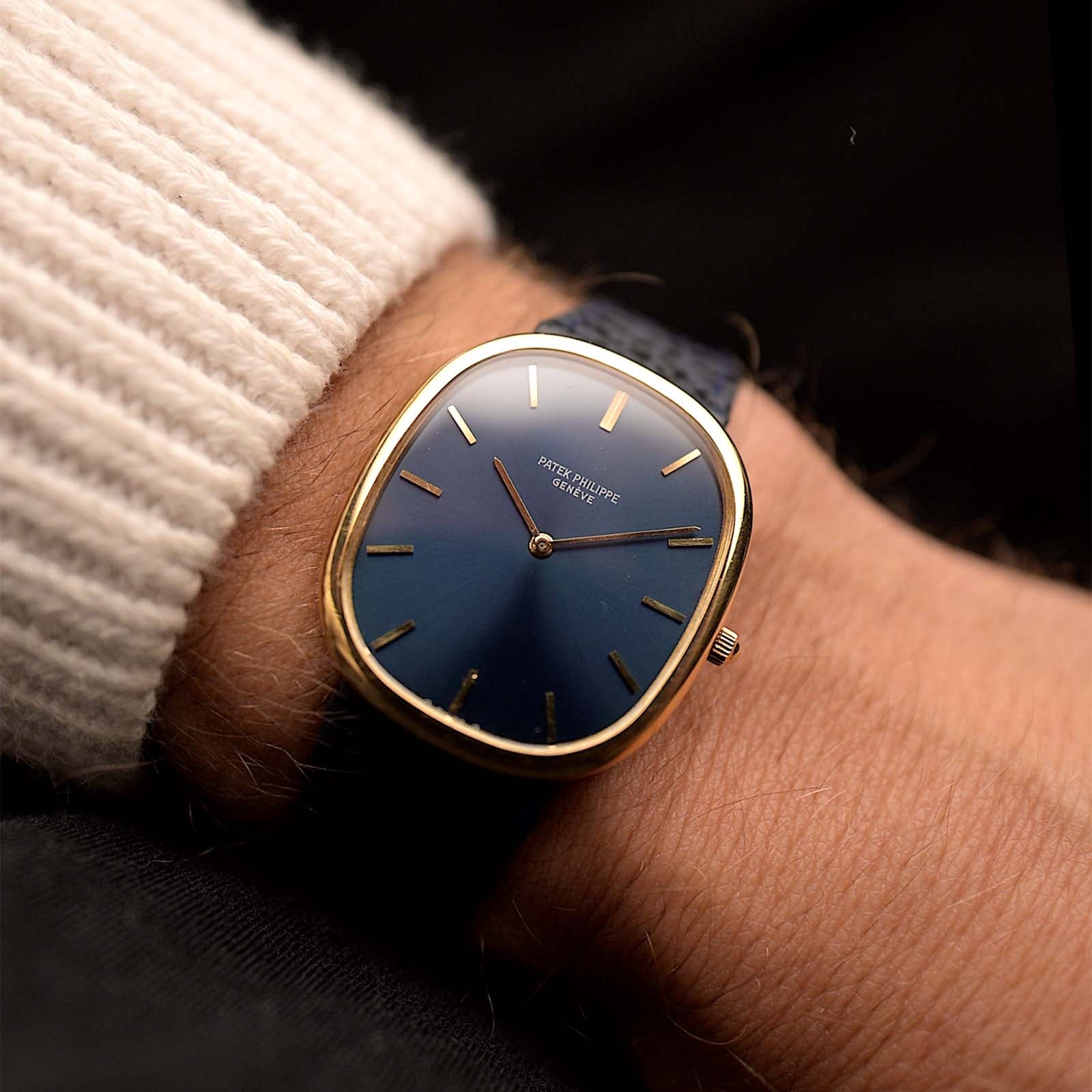
In 2025, Patek Philippe became the strongest brand by share, just over twenty percent. Audemars Piguet gained ground. Rolex remained important, but less dominant. Omega and Vacheron Constantin stayed remarkably stable. Cartier and Piaget increased their presence.
No single brand took over. The market matured.
Visibility, Trust, and the Long View
More than one million visitors explored our website in 2025. In an online-only business, visibility alone does not generate sales. Trust does — and trust takes time.
We quietly introduced a small line of our own products, such as watch straps, not as a revenue driver but as an extension of the brand. Internally, we restructured our marketing efforts, allowing greater focus on long-form content and education. Beginning in 2026, we aim to publish one in-depth video each week.
What 2025 Ultimately Revealed
2025 did not reward speed or volume. It rewarded restraint, clarity, and patience.
Vintage watches remain difficult. This business remains difficult.
But that difficulty is not a flaw.
If it were easy, everyone would do it.




1 comment
Well done!
Leave a comment